Introductie
As an SME, are you struggling with disparate marketing channels, fragmented customer data, and inconsistent customer experiences? Nowadays, consumers expect nothing less than a smooth, personalized experience across all channels. A newsletter line that doesn't match store recommendations, an online store without WhatsApp feedback, or a completely failed follow-up? That can damage your revenue and customer relationships. The solution: omnichannel marketing. Especially with the use of AI, the playing field is changing radically. In this article, you will discover how you, as an SME entrepreneur, can leverage omnichannel marketing to work in a customer-centric, efficient, and future-proof manner.
What does omnichannel marketing mean?
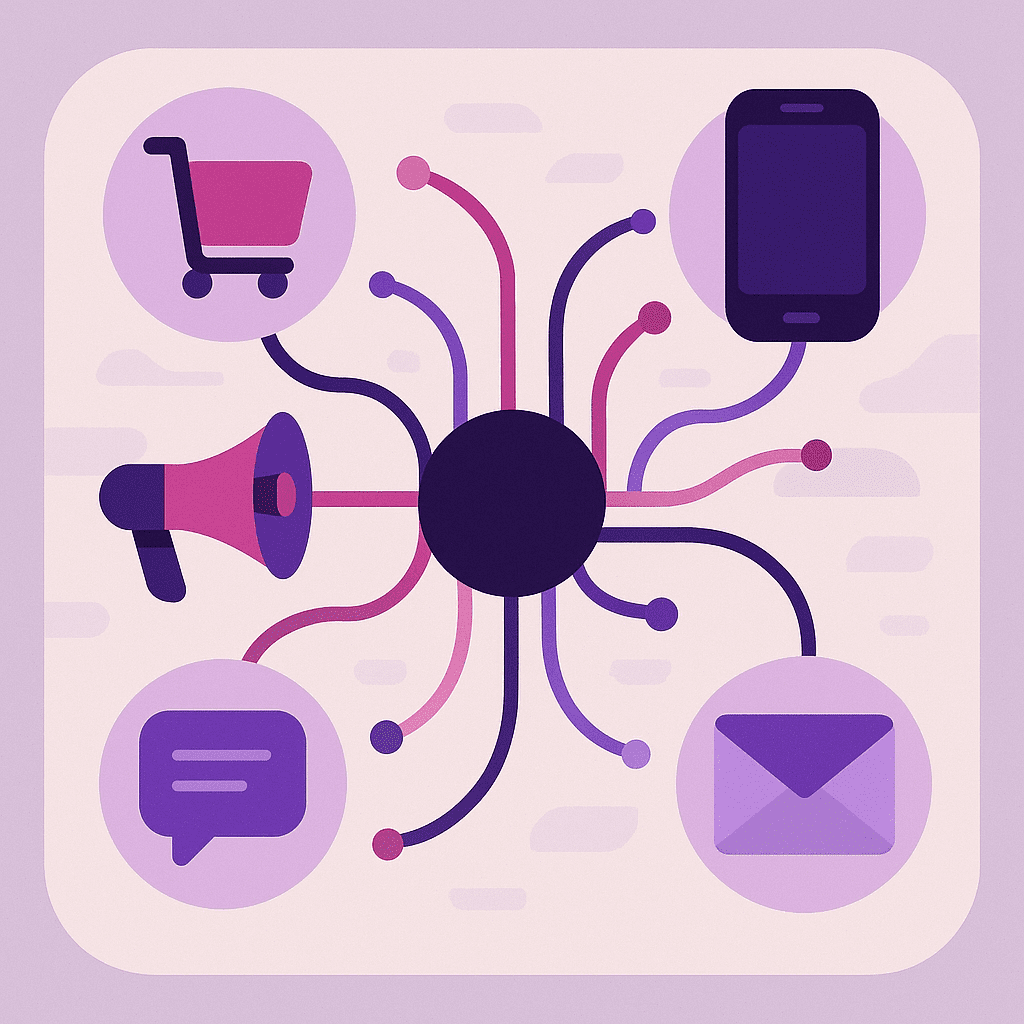
Omnichannel marketing is a marketing strategy in which you, as an SME entrepreneur, fully align all customer channels (such as the store, webshop, WhatsApp, email, and social media) for an integrated customer experience. Unlike multi-channel marketing, where channels often function independently, an omnichannel approach ensures that the customer journey is seamless and personalized. For example: a customer who receives advice in the store, gets a discount code online, and receives a reminder via WhatsApp experiences one integrated journey. AI and marketing automation strengthen this strategy by connecting customer data and communication and automatically optimizing them.
Omnichannel marketing is an integrated marketing strategy in which you seamlessly align all customer interactions, both online and offline.
Voordelen
-
Consistent customer experience
Customers experience the same message, service, and brand value everywhere, which significantly increases the likelihood of repeat purchases.
-
Efficiency and time saving
Automating processes and integrating systems reduces duplication of work and streamlines customer contact.
-
In-depth insight into customer behavior
By connecting all channels, you collect reliable customer data for better decision-making and targeting.
-
Revenue growth
More targeted offers and personalized promotions increase conversion and boost customer value.
Nadelen / Beperkingen
-
Investment in system integration
Connecting channels and tools requires an initial investment and potentially new software.
-
Complexity and knowledge
Success depends on coordination between departments and technical knowledge within the team.
-
Change in working method
An omnichannel approach often requires new work processes and employee training.
Voorbeelden
-
Retail store links webshop & WhatsApp service
A fashion store offers physical sales, online ordering, and direct customer service via WhatsApp, where offers are automatically tailored to purchasing behavior.
-
Service provider with integrated customer communication
An administration office processes requests via the website, email, and telephone, and synchronizes all customer data in a single CRM system for optimal follow-up.
-
Restaurant connects website, takeout platforms, and social media
A local restaurant allows customers to make reservations via an app, place orders via the website, and keeps all interactions up to date via a central tool.
Stap-voor-stap
-
Clearly map out the customer journey
Analyze all touchpoints and channels: where and when does the customer seek interaction with your company?
-
Select relevant marketing channels
Choose the channels where your target audience is active: store, website, email, WhatsApp, telephone, or social media.
-
Integrate systems and data
Connect CRM, marketing automation, and other tools so that customer data is available centrally and in real time.
-
Use AI smartly
For example, use an AI chatbot, dynamic emails, or predictive recommendations to approach customers more personally.
-
Monitor, analyze and optimize
Measure performance per channel, learn from customer data, and continuously adjust your omnichannel activities.
Tools
-
HubSpot Bekijk →
Complete marketing automation platform for connecting email, social media, CRM, and workflows. Offers automation, AI, and extensive reporting.
-
Salesforce CRM Bekijk →
Powerful CRM system for central storage of customer data, sales and marketing integration, and omnichannel reporting.
-
ManyChat Bekijk →
AI-powered chatbot for WhatsApp, Facebook Messenger, and Instagram, useful for centralized customer service and automated follow-up.
Use cases
-
Garden center links store floor, email, and app
Customers receive personalized offers via email, can manage their loyalty card via the app, and receive relevant tips in the store, all based on centrally stored customer data.
-
Car garage streamlines quotation requests
Quotes can be requested via the website or WhatsApp, confirmations are sent by email, and the CRM links all contact points for optimal customer follow-up.
-
Online specialist connects physical store and webshop
A company for kitchen specialty stores ensures that online and offline purchases are visible in the customer profile, enabling the sales team to provide more customer-focused advice.
Veelgestelde vragen
Certainly not. By making smart choices regarding the most important channels and the ease of use of tools, SMEs in particular can positively differentiate themselves and strengthen customer loyalty.
Costs vary by company, but entry-level tools are often affordable. Clear planning is essential: you can start with small steps and scale up in phases.
With modern marketing software and integrations, complexity has decreased significantly. Start by linking two core systems (for example, webshop and CRM) and expand as soon as it pays off.
Absolutely. Start with your most used channels, integrate them step by step, learn from the results, and only expand when the added value has been proven.
AI is not a requirement, but it significantly accelerates automation and personalization. A simple first step can also be taken without AI, after which you add it over time for greater returns.