
Introductie
More and more SMEs want to work with their content in a flexible, scalable, and future-proof way. But how do you manage that in a rapidly changing marketing landscape?
Traditional CMSs fall short when it comes to modern, omnichannel marketing. These systems are typically built for a single website and make it difficult to separate content and design. The rise of the headless CMS changes this: you manage content centrally and distribute it to the website, app, email, and more – all from a single source.
A headless CMS offers significant advantages, especially for ambitious SMEs, growing brands, and agencies that want to adapt quickly. You become less dependent on fixed templates and gain control over content integration for every channel.
Definition of a Headless CMS
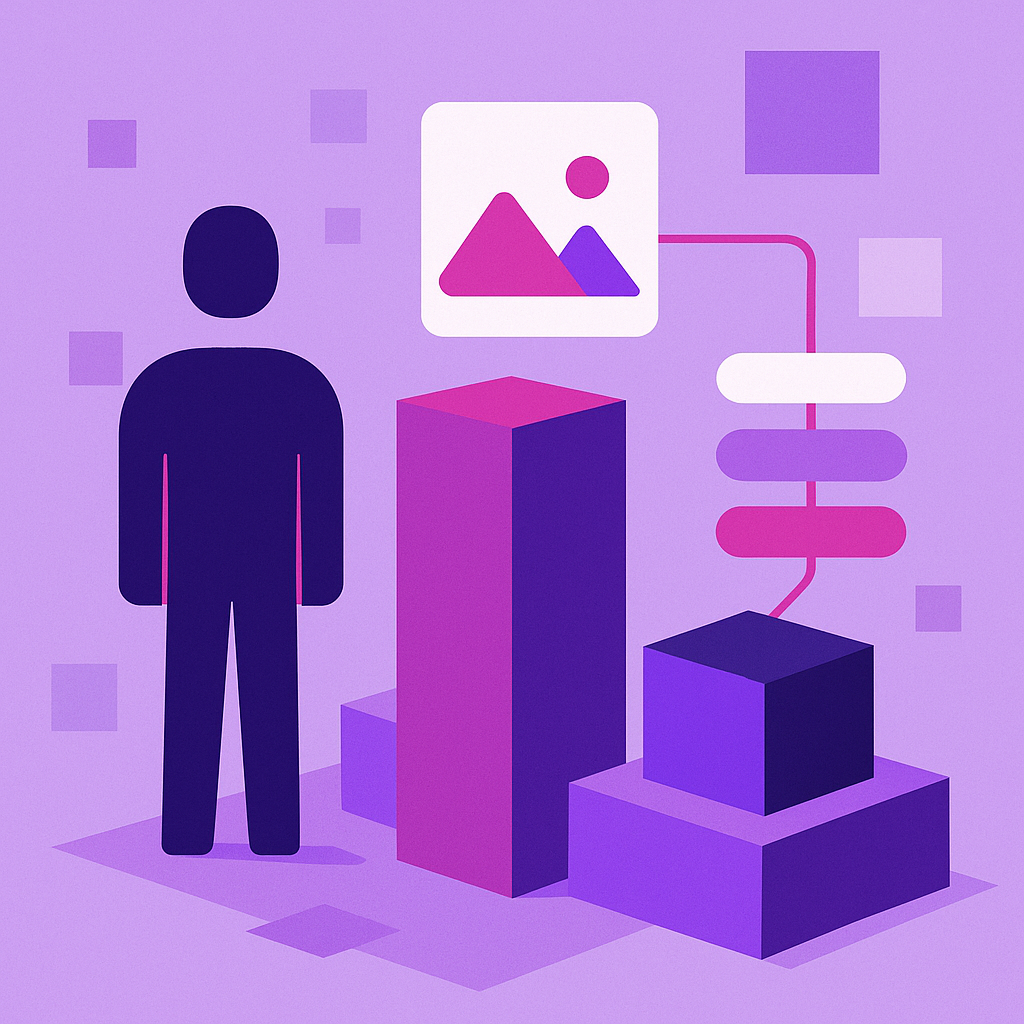
A headless CMS is a content management system where the backend (for managing and storing content) is completely separate from the frontend (where and how the content is displayed). Instead of determining a fixed theme or design, the headless CMS sends your content via APIs to any desired channel – website, app, social media, or digital boards. Think of it as the central kitchen of a restaurant chain: where you prepare dishes (content) and serve them from a single location (the CMS) on any desired terrace (channel).
A headless CMS is a flexible content management system in which content and presentation are completely separated.
Voordelen
-
Publish content on multiple channels simultaneously
You can easily send the same content to your website, app, social media, or newsletters without copy-pasting or duplication of work.
-
Redesign faster without full migration
The frontend and backend are separate, allowing you to effortlessly refresh the 'front end' without having to repost your content.
-
Integration with AI tools and marketing software
Connect your CMS directly with advanced analytics, automation, or personalization tools for dynamic marketing content.
-
Better loading speed and user experience
Headless architectures ensure super-fast sites and apps, which directly contributes to your conversion and customer satisfaction.
Nadelen / Beperkingen
-
More technical knowledge required
Without experience with APIs or modern frontend techniques, the transition is more challenging for your team.
-
Custom integrations needed
Many integrations (for example to e-commerce or CRM) require customization and development hours – less plug-and-play than with traditional systems.
-
Less standard templates
Most headless CMSs offer few to no ready-made themes or plugins like WordPress, meaning design and features are more often custom-made.
Voorbeelden
-
Omnichannel e-commerce
A growing webshop displays a shared product range in real time across the website, mobile app, and in-store checkouts, all powered by a single headless CMS.
-
Community platform
A trade association shares news and agenda items lightning fast on its platform, mobile app, newsletter, and LED screen at the entrance.
-
Marketing agency with dynamic landing pages
For every campaign, the agency builds personalized landing pages, deployed from the same CMS – ideal for A/B testing and quick follow-up.
Stap-voor-stap
-
Inventory your content and channels
Determine what types of content you have and where (digital) you want to publish them, now and in the future.
-
Select the right headless CMS
Compare options based on price, flexibility, API capabilities, management, and growth ambitions. Involve your technical partner in the choice.
-
Design the content structure (content model)
Determine which content types, fields, and relationships you need for maximum reusability and scalability.
-
Connect your frontend and start integrating
Have your web developer(s) connect the desired channel (website, app) via the headless CMS APIs. Start with a pilot to learn how to switch smoothly.
-
Test, train, and optimize continuously
Monitor publishing, speed, and automation, train the team, and scale your content workflows further at your own pace.
Tools
-
Contentful Bekijk →
Commercial, user-friendly headless CMS with a powerful API, fast integration, and good scalability. Price: from €450/year.
-
Strapi Bekijk →
Open source headless CMS, flexible to configure, easy to host, many plugin options, free and paid add-ons.
-
Sanity Bekijk →
Real-time collaboration, powerful integrations (including AI), easily expandable from basic to enterprise. Free entry-level account available.
Use cases
-
Launching fast campaign websites
Marketing teams bring standalone promotional landing pages live in days, without modifying the existing website.
-
Omnichannel publishing for retail
Local shops manage their news, products, and promotions from a single CMS and publish directly to the web, app, narrowcasting, and social media.
-
Personalized content flows with AI
B2B companies combine a headless CMS with AI personalization for dynamic, data-driven newsletters and website experiences.
Veelgestelde vragen
Modern headless CMSs offer a user-friendly interface for content management. The technical difference lies primarily in the configuration; daily operation is often comparable to traditional systems.
Costs vary by platform. You often pay for users, API calls, and storage. Maintenance is partially outsourced (SaaS) or depends on your hosting. Get good advice beforehand.
That depends on the complexity of your content. Professional guidance makes the migration manageable and prevents data loss. A phased approach often works best.
The number of specialists is growing rapidly. Particularly at web development and marketing agencies, a great deal of up-to-date expertise is available, including Ploko's network.
With proper preparation and a backup strategy, data is safe. Pay attention to the export/import capabilities of your current CMS and always test migrations in a test environment.